
The Fool's Privilege

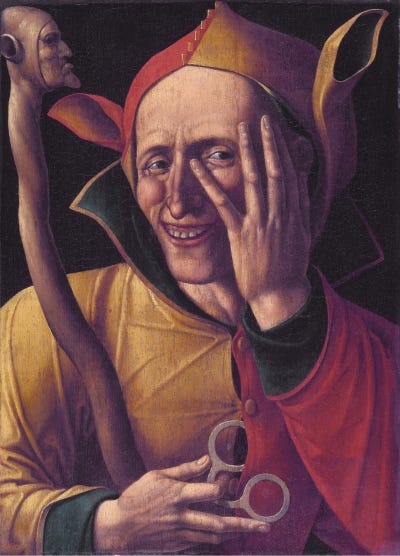
Reading copy cranked out by ChatGPT can be exasperating. Plus, sleep-inducing. There's a recognizable cadence and particular syntax that can't be avoided when the ghost in the machine is hell-bent on continually selecting the perfect…next…word. That's surely why some of the best prompts are framed using language and style that can influence the way the response is crafted, or include a request to speak at a certain grade level. Neil Webster, who hired me as a copywriter at Nike, told me that part of our job as writers was to inject a measure of humor and randomness into the staid boardrooms of that Beaverton office park. He challenged me to remember why the king had a fool—to keep the courtiers on their toes, to inject a bit of uncertainty and bring a perspective—cracked, perhaps, but at least unique—that drew the king's eye away from the deep well of the perpetually expected. Artificial Intelligence is a great averager, masterfully consuming myriad inputs and delivering a synthesis that's right down the middle. The burden of genuine intelligence may be to embrace the fool's privilege, to wear the cap and bells with purpose and pride. If we don't, our AI-assisted output will never be better than average.